
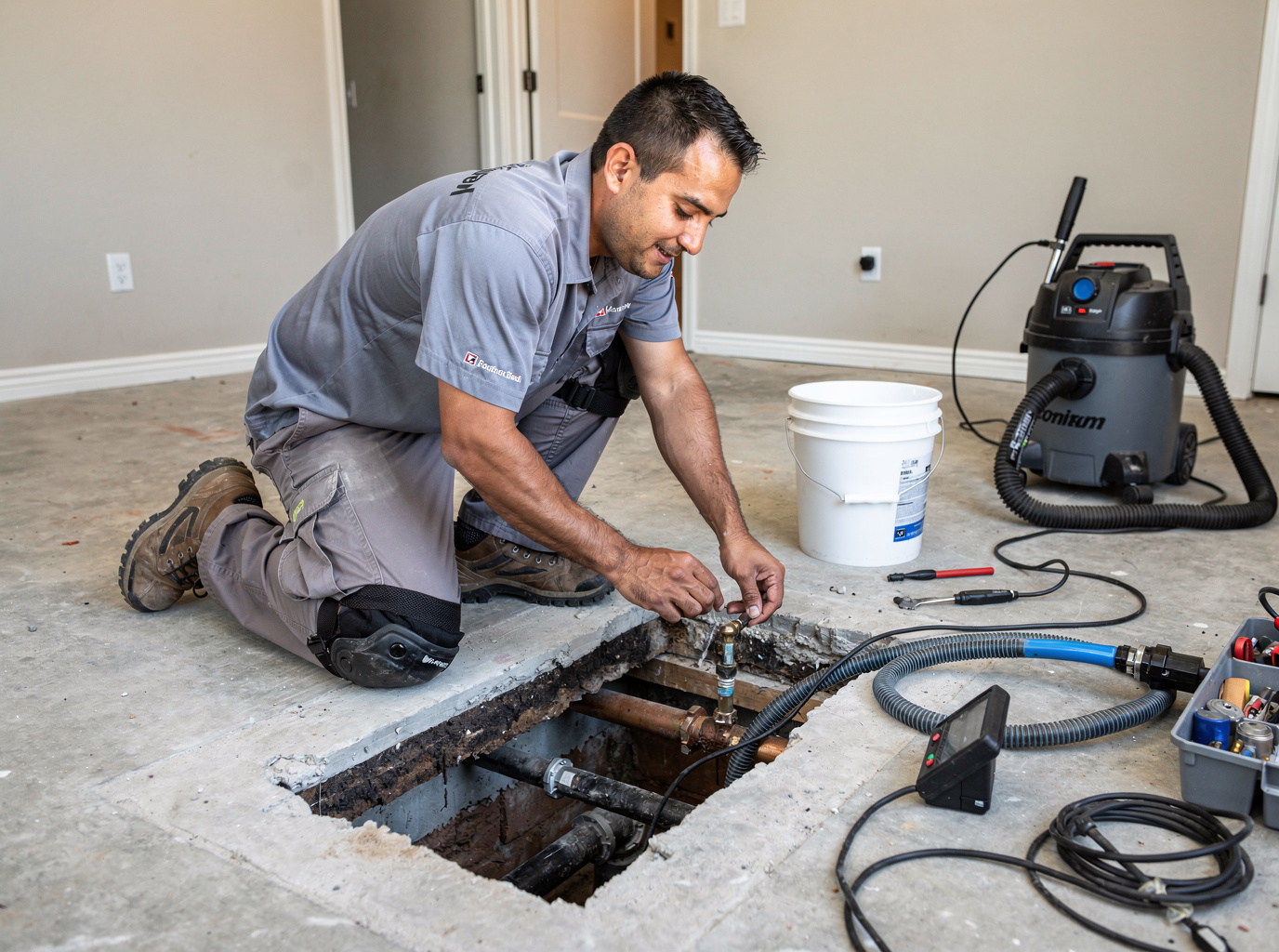
Unexplained water use, a persistent damp area or a suspected leak below a floor can be reasons to request an assessment. These signs do not, by themselves, establish a slab leak. Explain what you have noticed, when it started and whether any earlier inspection or plumbing work has been done.
Ask how the provider plans to investigate and locate the problem. Detection scope and repair scope may be separate. Request an explanation of what has been confirmed, where the affected line is and any limits of the investigation before approving a repair.
If a leak is found, discuss the proposed repair and alternatives. Accessing a section, rerouting a line or a different approach may involve different disruption and restoration. The provider should assess the property and explain why a particular option is proposed. An older home does not automatically need repiping.
Ask whether the quote includes detection, opening and closing access areas, the plumbing repair and restoration. Confirm who handles each part of the work. Fullerton Plumbing Help connects callers with independent providers; the provider performs the assessment and sets the estimate.
Leak detection and water leak repair in Fullerton, CA
Not every leak is under the slab. Signs worth mentioning when you call include a water bill that rises without a change in use, the meter dial moving with every fixture off, the sound of running water, warm spots on the floor, damp drywall, or a hot water heater that runs constantly. A provider may use acoustic listening, thermal imaging or pressure testing to narrow down the location before proposing a repair.
A simple check you can do first: turn off every fixture and look at the water meter. If the low-flow indicator still moves, water is going somewhere. Share that result when you call. For leaks that are actively spreading, see emergency plumbing in Fullerton.
How leak detection in Fullerton usually works
Leak detection is the step that finds where water is escaping before anyone opens a wall or floor. Depending on the symptoms, an independent provider may use a combination of methods: a pressure test on isolated sections of pipe, acoustic listening equipment that picks up the sound of water escaping under pressure, thermal imaging to spot temperature differences, a camera inspection for drain and sewer lines, or tracer gas for hard-to-find leaks. Which method fits depends on the line involved, so ask the provider which one they plan to use and why.
Detection results have limits. A provider can often narrow a leak to an area, but the exact spot may only be confirmed once access is opened. Ask how the provider will report what they found, whether they will mark the location, and whether any photos or a written note come with the visit. That record is also useful if you later talk to your insurer or a second provider.
A quick leak checklist to run before you call
These checks take a few minutes and give the provider something concrete to work with. They do not replace an assessment.
- Meter test. Turn off every fixture, ice maker and irrigation timer, then look at the meter's low-flow indicator. If it keeps moving, water is going somewhere.
- Toilet dye test. Put a few drops of food coloring in the tank and wait without flushing. Color in the bowl points to a silent toilet leak, which is a common cause of a rising bill.
- Hot or cold side. If your water heater has a cold-water shutoff, closing it for a short time and rechecking the meter can help show whether the loss is on the hot side. Turn it back on afterward, and do not run a gas or electric heater without water in the tank.
- Outdoor and irrigation lines. Look for soggy ground, new green patches or a spinning meter with the house quiet. Irrigation and hose bib leaks are often cheaper to locate than lines inside the home.
- Bill history. Compare the last several water bills for a steady climb that does not match your household's use.
When a leak is more than a leak detection call
If water is visibly spreading, a ceiling is sagging or a floor feels warm and wet, shut off the main valve and treat it as urgent: see emergency plumbing in Fullerton. If a leak turns out to be a failing drain line rather than a pressure line, a camera inspection may lead to drain cleaning or sewer line repair questions instead. If the cause is the heater itself, start with water heater repair.
Take dated photos of damp areas and keep your meter readings. If you plan to ask your insurance company about a claim, ask them what they require before repairs begin, because policies differ on what they treat as covered. Your water utility may also have its own rules about usage alerts or bill adjustments after a repaired leak, so it is worth asking them directly.
Related pages
Once a leak is found, the fix may fall under plumbing repair in Fullerton. If water is escaping and you cannot stop it, read about the emergency plumber in Fullerton. Wet ceilings and drains that back up are different problems; see drain cleaning in Fullerton.
Local insight
Keep detection and repair decisions separate: first ask what has been confirmed, then compare the proposed repair scope and any alternatives.
Illustrative Example: A Suspected Hidden Leak
A homeowner could report unexplained water use and a damp area. A provider might investigate whether a leak is present and where it is before discussing repair. This is a hypothetical assessment example, not a diagnosis or completed job.
How it works
- 1
Describe the issue
Call with your Fullerton ZIP code, symptoms and any relevant previous work.
- 2
Discuss assessment
Ask the independent provider about availability, the proposed inspection and visit fees.
- 3
Review the estimate
Confirm the scope, options and charges directly with the provider before approving work.
- 4
Arrange service
Scheduling and workmanship are handled by the independent provider.
Pricing
Detection, access, the affected line, the repair approach and restoration can involve separate costs. Ask the provider for an estimate that identifies the included work.